
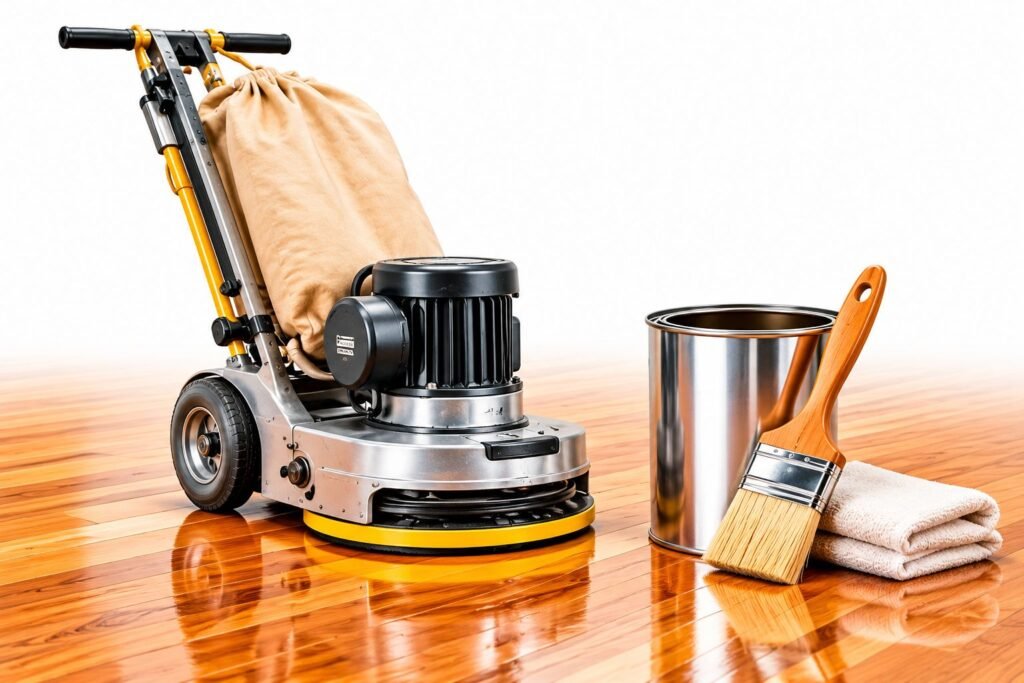
The Hardwood Floor Refinishing Cost Calculator helps homeowners estimate the cost of restoring their existing hardwood floors. The total refinishing cost depends on several factors, including floor size, wood condition, refinishing method, labor, and finish selection.
Use our Hardwood Floor Refinishing Cost Calculator to estimate your project expenses before hiring a flooring contractor. Enter your floor measurements and estimated price per square foot, then account for additional services such as staining, repairs, or stair refinishing.
Professional hardwood floor refinishing commonly costs around $3 to $8 per square foot, although prices vary by location and project requirements. Understanding these costs can help you plan a realistic budget and compare contractor estimates.
Hardwood Floor Refinishing Cost Calculator
Estimate your hardwood floor refinishing cost based on room size and additional services.
Hardwood Floor Refinishing Cost per Square Foot
The cost of refinishing hardwood floors is generally calculated using the total floor area and the contractor’s price per square foot. The following table provides a general planning estimate.
| Floor Area | Estimated Cost |
|---|---|
| 100 sq. ft. | $300–$800 |
| 250 sq. ft. | $750–$2,000 |
| 500 sq. ft. | $1,500–$4,000 |
| 750 sq. ft. | $2,250–$6,000 |
| 1,000 sq. ft. | $3,000–$8,000 |
| 1,500 sq. ft. | $4,500–$12,000 |
These estimates use a broad rate of $3–$8 per square foot for professional sanding and refinishing. They do not include every possible extra charge, such as extensive repairs, furniture moving, or stair refinishing.
Smaller projects may have a higher effective cost per square foot because contractors can apply minimum service charges to cover setup, equipment, and travel.
How to Use the Hardwood Floor Refinishing Cost Calculator
Our calculator helps you estimate the cost of refinishing your existing hardwood floors using basic measurements and project expenses.
Follow these steps:
- Enter floor dimensions: Add the room’s length and width to calculate its square footage.
- Enter the refinishing rate: Use an estimated contractor price per square foot or a local quote.
- Include additional expenses: Add separate costs for staining, repairs, furniture moving, or other services when applicable.
- Calculate the total: Review the estimated project cost to plan your budget.
The Hardwood Floor Refinishing Cost Calculator makes it easier to compare estimated expenses and plan your flooring budget before starting the project.
For multiple rooms, calculate each room’s area separately and add the measurements together. If a room has an irregular shape, divide it into smaller rectangles and combine their square footage.
Make sure you do not count the same service twice. For example, if staining is already included in the contractor’s per-square-foot rate, do not add it again as a separate expense.
How to Calculate Hardwood Floor Refinishing Cost
You can estimate the basic project cost with this formula:
Total Cost = Floor Area × Cost Per Square Foot + Additional Expenses
First, calculate the floor area:
Floor Area = Length × Width
Then multiply the total square footage by the estimated refinishing rate and add any extra charges.
Cost Calculation Example
Suppose you have a bedroom measuring 15 feet by 20 feet. The estimated refinishing rate is $4.50 per square foot, with an additional $200 for preparation and other services.
- Floor area: 15 × 20 = 300 sq. ft.
- Basic refinishing cost: 300 × $4.50 = $1,350
- Additional expenses: $200
- Estimated total: $1,550
This calculation provides a starting budget. Your final price may change after a contractor inspects the floor and confirms the required work.
What Affects Hardwood Floor Refinishing Cost?
The same floor area can produce different estimates depending on the condition of the wood, the work required, and local labor rates.
1. Floor Condition and Repairs
Floors with light surface wear may only need a maintenance coat or screen-and-recoat. However, deep scratches, worn-through finishes, water stains, and damaged boards may require complete sanding or repairs.
Loose boards, gaps, and moisture-related problems should be assessed before refinishing. A new finish cannot correct underlying structural or water damage.
2. Solid vs. Engineered Hardwood
Solid hardwood is made from a single piece of wood and can often be refinished multiple times, depending on its remaining thickness.
Engineered hardwood has a real-wood surface layer attached to a manufactured core. Its ability to withstand sanding depends on the thickness and condition of that top wear layer. Some engineered floors can be refinished, while others cannot.
Check the manufacturer’s specifications or ask a flooring professional before sanding engineered hardwood.
3. Refinishing Method
The selected method has a significant effect on project cost.
| Method | Description |
|---|---|
| Maintenance coat | Applies a fresh protective finish to a suitable existing surface |
| Screen-and-recoat | Lightly abrades the existing finish before applying a new coating |
| Full sanding and refinishing | Removes the old finish and sands the wood before applying a new finish |
A screen-and-recoat is generally suitable when the existing finish is still intact but looks dull. It will not remove deep scratches or repair exposed wood. Full sanding is more appropriate when the existing finish has worn through or the floor needs more extensive restoration.
4. Wood Species and Finish Type
Oak, maple, cherry, pine, and other wood species can respond differently to sanding and staining. Some woods require additional care to achieve an even appearance.
The protective finish also matters. Water-based polyurethane generally maintains a clearer appearance, while oil-based polyurethane often creates a warmer or amber tone. Product selection, number of coats, and application requirements can affect the overall estimate.
5. Labor and Location
Labor rates vary across the United States. Metropolitan areas may have different pricing from smaller towns because of differences in operating expenses, demand, and contractor availability.
For a more realistic estimate, compare local flooring professionals who serve your ZIP code rather than relying entirely on national averages.
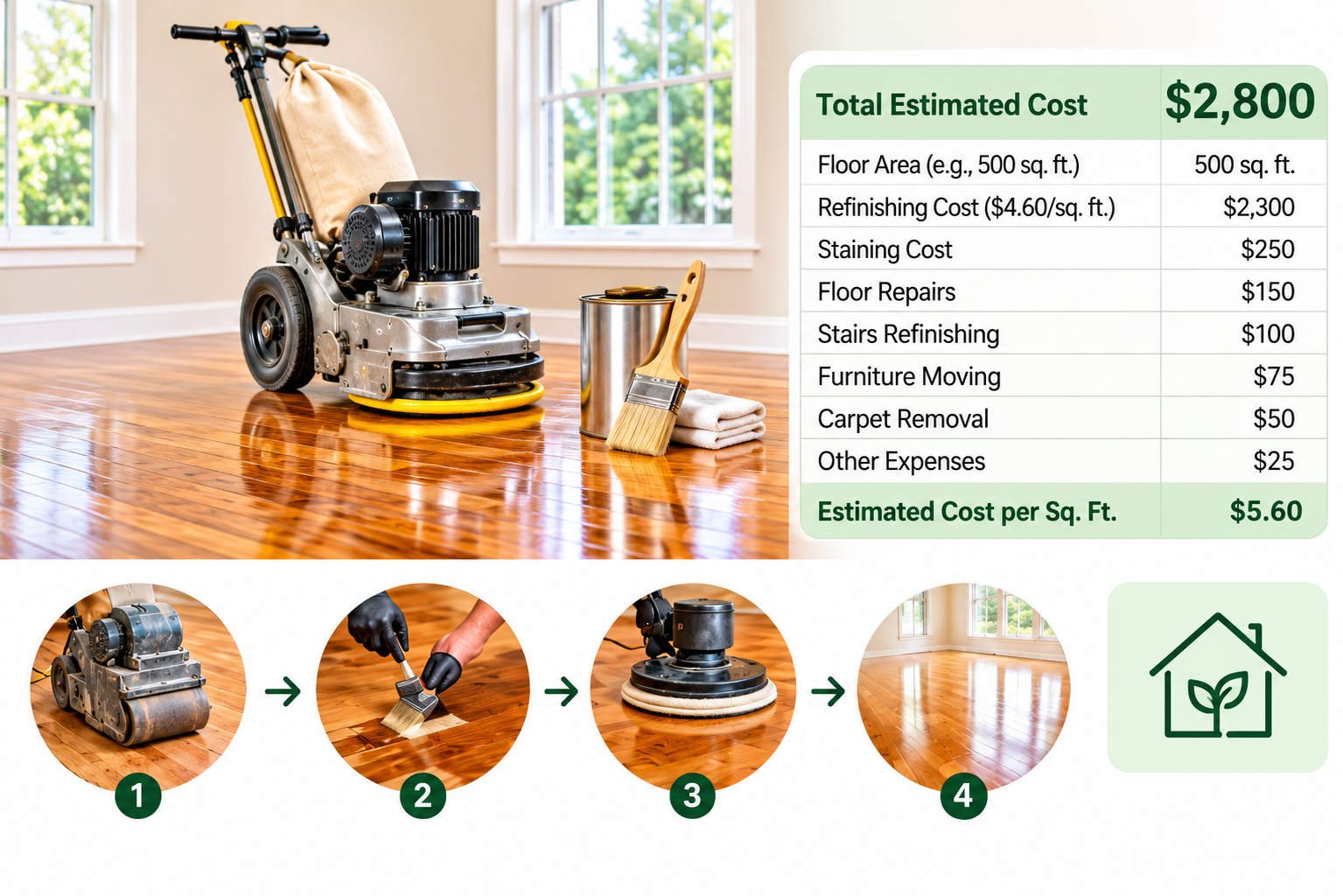
Additional Expenses to Include in Your Budget
The basic refinishing price may not cover every service required for your project. Consider these possible additional costs:
| Service | Why It May Cost Extra |
|---|---|
| Furniture moving | Heavy furniture may need to be removed and returned |
| Carpet removal | Carpet, padding, staples, or tack strips may need removal |
| Board replacement | Severely damaged hardwood may require replacement |
| Stair refinishing | Treads, risers, and edges require detailed work |
| Staining | Changing the wood color may involve additional materials and labor |
| Dust containment | Protective barriers and vacuum equipment may be required |
| Cleanup and disposal | Removing old materials and project debris may add charges |
Some contractors include preparation, cleanup, and basic repairs in their quoted price, while others list them separately. Always review the scope of work before comparing estimates.
What Is Included in Professional Hardwood Floor Refinishing?
A complete professional refinishing project generally involves three main stages:
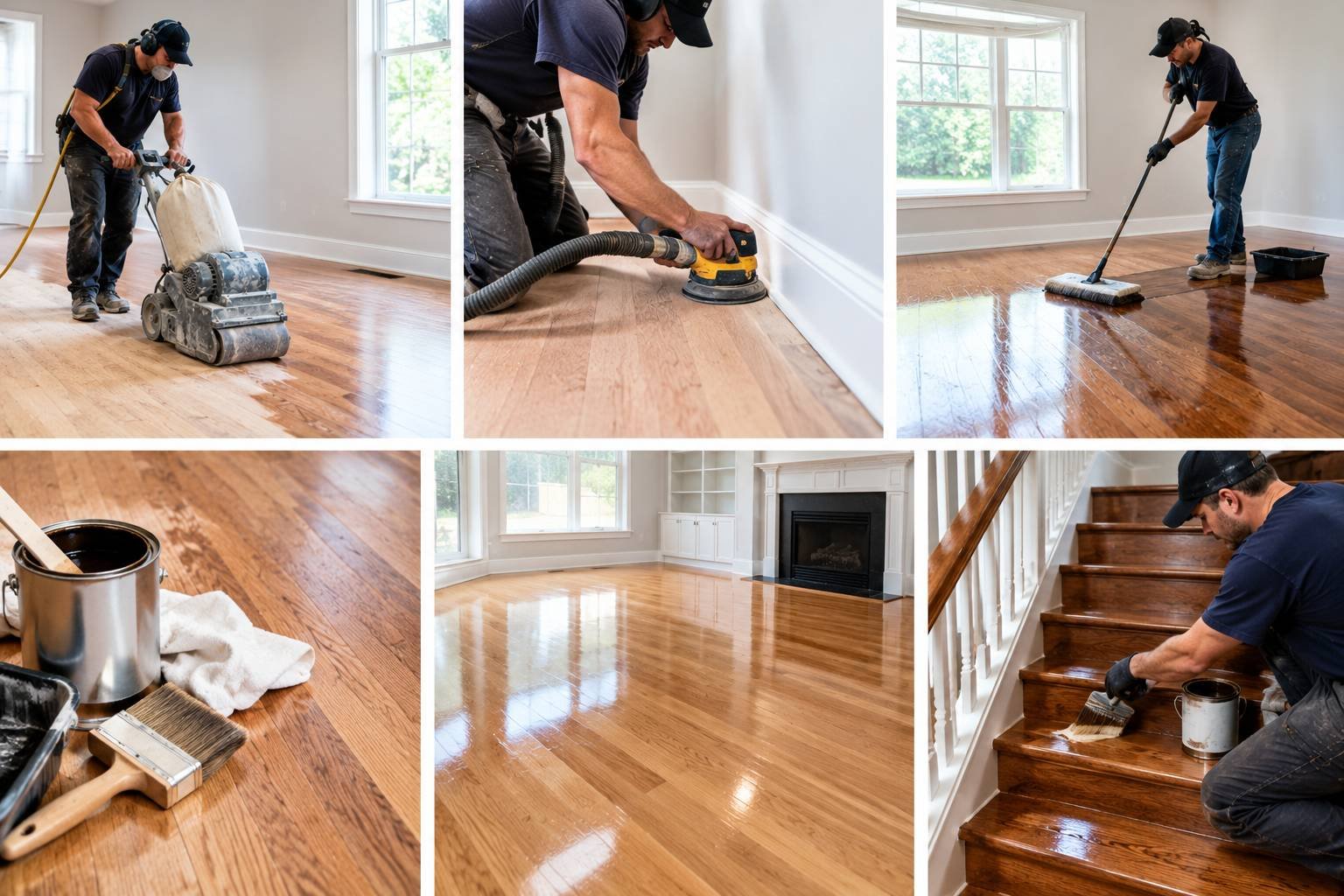
Floor preparation: The work area is cleared of furniture and rugs. The contractor inspects the floor for loose boards, protruding nails, stains, and damage.
Sanding and surface preparation: Professional equipment, such as drum or belt sanders and edge sanders, removes the existing finish and prepares the wood for a new coating.
Staining and finishing: If requested, stain is applied to change the wood’s color. A protective finish, such as polyurethane, is then applied according to the product instructions.
Some contractors use dust-containment systems connected to commercial vacuum equipment. These systems can reduce airborne dust, but they do not guarantee a completely dust-free process.
DIY vs. Professional Hardwood Floor Refinishing
Homeowners may consider DIY refinishing to reduce labor expenses. However, the project requires proper equipment, preparation, and experience.
A DIY project may involve renting floor sanders, purchasing sandpaper, stain, finish, applicators, and protective equipment. Mistakes during sanding can leave uneven surfaces, visible marks, or permanent damage.
Professional contractors bring specialized equipment and experience with different wood species and finish products. Their services may be particularly useful for large areas, damaged floors, stairs, or engineered hardwood with an uncertain wear layer.
When comparing both options, include equipment rental, materials, repairs, cleanup, and the value of your time. The lowest initial cost does not always mean the lowest overall expense.
How Long Does Hardwood Floor Refinishing Take?
A refinishing project may take several days, depending on the floor area, repairs, number of finish coats, and drying conditions.
It is important to understand the difference between drying and curing:
- Drying time: The period required for a finish coat to become dry enough for the next step or limited use.
- Curing time: The longer period during which the finish develops its intended hardness and durability.
Water-based and oil-based finishes have different application and drying schedules. Temperature, humidity, ventilation, and product specifications can also affect the timeline.
Follow the manufacturer’s instructions for walking on the floor, moving furniture, placing rugs, and cleaning. A finish that feels dry may not be fully cured.
Tips for Getting an Accurate Refinishing Estimate
Before hiring a contractor, prepare the following information:
- Measure the total square footage of every room.
- Identify whether the flooring is solid or engineered hardwood.
- Note visible scratches, stains, loose boards, and water damage.
- Decide whether you need recoating or full sanding.
- Ask whether staining and protective finish coats are included.
- Confirm additional charges for stairs, furniture moving, and repairs.
- Request an itemized written estimate.
Getting multiple quotes can help you compare local prices. However, compare the actual services included rather than choosing a contractor based only on the lowest total.
If you’re also planning concrete flooring or other home improvement projects, use our Concrete Slab Cost Calculator to estimate concrete quantities, material costs, and labor expenses.
FAQs
How much does it cost to refinish hardwood floors per square foot?
Professional hardwood floor refinishing commonly costs around $3–$8 per square foot for a full sanding and refinishing project. Actual prices depend on floor condition, wood type, location, and additional services.
How much does it cost to refinish 1,000 square feet?
At an estimated rate of $3–$8 per square foot, refinishing 1,000 square feet may cost approximately $3,000–$8,000 before additional expenses.
Is it cheaper to refinish or replace hardwood floors?
Refinishing is often less expensive when the existing hardwood is structurally sound and has enough material for sanding. Replacement may be necessary when the floor has extensive damage or cannot be refinished safely.
Can engineered hardwood floors be refinished?
Some engineered hardwood floors can be refinished, but the decision depends on the thickness and condition of the real-wood wear layer. Check the manufacturer’s specifications before sanding.
Does hardwood floor refinishing include staining?
Not always. Some contractors include sanding and a clear protective finish, while staining may be an optional service with an additional charge. Confirm the details in your estimate.
Is dustless hardwood floor refinishing completely dust-free?
No. Dust-containment equipment can reduce airborne dust during sanding, but it cannot guarantee that all dust will be eliminated.
How long should I wait before putting furniture back?
The waiting period depends on the finish product and its curing instructions. Some finishes allow light foot traffic before they are fully cured, while furniture and rugs may need to wait longer.
How many times can hardwood floors be refinished?
There is no fixed number for every floor. The number of possible refinishing cycles depends on wood thickness, previous sanding, floor construction, and remaining usable material.
How can I get a more accurate refinishing estimate?
Measure the floor area, identify the flooring type, assess visible damage, and select the appropriate refinishing method. Use a calculator for an initial budget, then request itemized quotes from local flooring professionals.
Estimate Your Hardwood Floor Refinishing Cost
Planning your project starts with understanding the floor area, its current condition, and the work required. Our Hardwood Floor Refinishing Cost Calculator helps you estimate expenses using square footage, refinishing rates, and additional project costs.
Use your estimate to plan a realistic budget, compare contractor quotes, and understand the potential expenses before starting your hardwood floor refinishing project.