
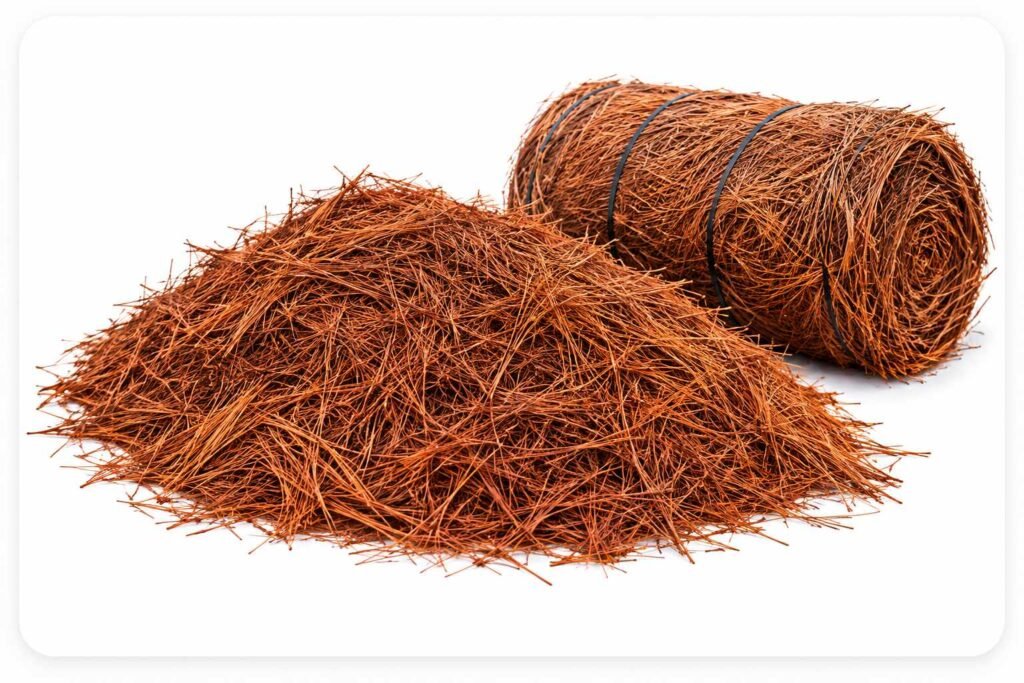
Planning to spread pine straw around your trees, flower beds, or landscape? Our Pine Straw Calculator helps you calculate how many bales you may need based on your area’s dimensions, the coverage per bale, and an extra material allowance. Pine straw is a popular landscaping mulch that helps cover garden beds, protect soil, and create a neat appearance around trees and plants. You can also calculate your material cost by entering the price per bale. Whether you’re refreshing existing landscape beds or covering a new area, estimating your pine straw needs before buying helps you plan your project more effectively. It can also reduce unnecessary trips to the store and help you avoid ordering too little material for proper coverage.
Pine Straw Calculator
Estimate your pine straw bales, coverage area, extra material, and project cost.
Your Pine Straw Estimate
Estimates are approximate. Actual coverage depends on bale size, pine straw type, application depth, and ground conditions.
How to Use the Pine Straw Calculator
Follow these simple steps to estimate how much pine straw your new project requires:
Enter the Length:
Measure the length of your landscape bed in feet and inches.
Enter the Width:
Measure the width of the area you want to cover with pine straw.
Choose the Application Depth:
Enter your desired pine straw mulch depth in inches.
Enter Coverage per Bale:
Use the coverage information provided by your local pine straw supplier to determine how much area one bale can cover.
Add an Extra Material Allowance:
Include some additional material to account for uneven ground, edges, and minor measurement differences.
Enter the Price per Bale:
This field is optional and helps you estimate the total material cost for your project.
Calculate Your Results:
Review the total area, estimated number of pine straw bales, extra bales, and material cost if you entered a price.
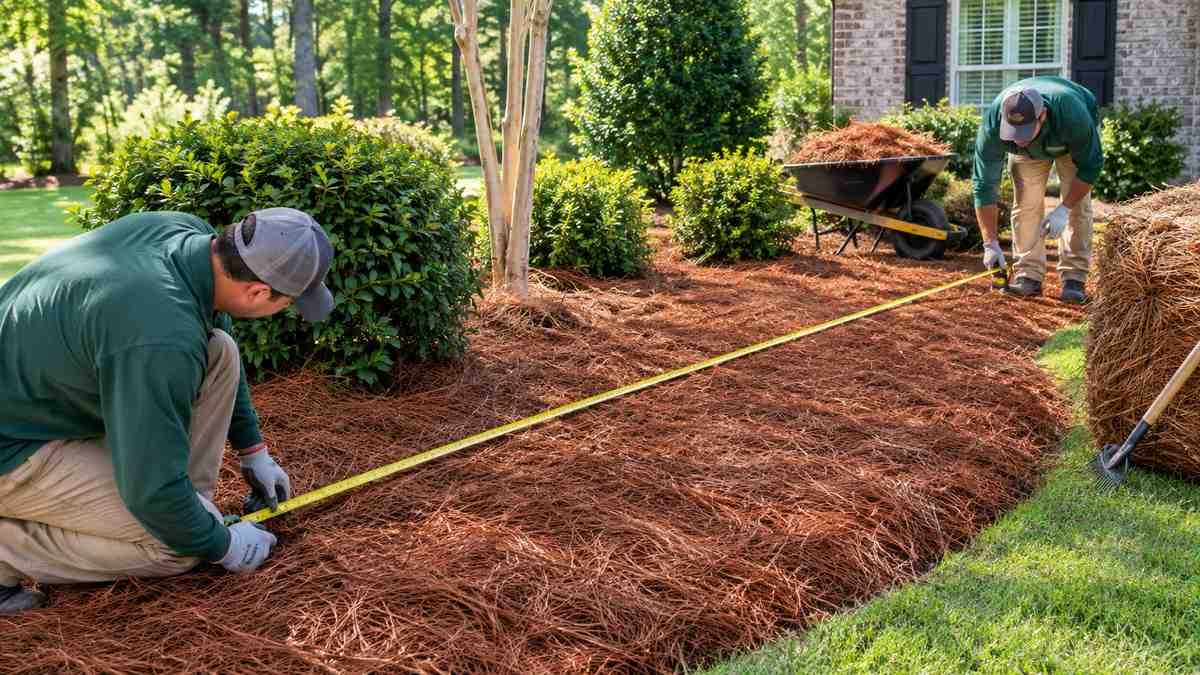
For rugged shaped landscape beds, divide the area into smaller rectangles. Calculate each section separately, then add the areas together to estimate your total pine straw requirements more accurately.
If your landscaping project also involves leveling uneven ground or filling low spots before applying pine straw, use our Fill Dirt Calculator to estimate how much fill dirt you may need for the area.
How Many Square Feet Does One Bale of Pine Straw Cover?
The amount of area covered by a single pine straw bale depends on its size, the type of pine straw, how tightly it is packed, and the depth of the finished mulch layer. For a typical application, some suppliers estimate that one bale covers approximately 35–40 square feet. To estimate how much pine straw you need, measure your landscape bed in square feet (sq ft) and compare the area with the coverage provided by each bale. However, this figure is intended for planning purposes and is not a universal standard. Always check the coverage details provided by your local supplier.
For example, if one pine straw bale covers about 35 square feet, covering a 350-square-foot landscape bed would require approximately 10 bales before adding extra material.
Keep in mind that a thicker layer of pine straw may require more material per square foot. When comparing suppliers, make sure their coverage estimates are based on similar application depths.
How to Calculate Pine Straw Bales
You can estimate your pine straw needs by following three simple calculations.
Step 1: Calculate the Total Area
For a rectangular landscape bed, multiply its length by its width to determine the total area.
Area Formula:
Area = Length × Width
For example, a landscape bed that measures 18 feet long and 15 feet wide has a total area of:
18 × 15 = 270 square feet
Step 2: Estimate the Number of Bales Needed
Divide the total area by the coverage provided by each pine straw bale.
Bale Calculation Formula:
Bales Needed = Total Area ÷ Coverage per Bale
For example, if your landscape bed covers 270 square feet and each bale covers 30 square feet:
270 ÷ 30 = 9 bales
Step 3: Add an Extra Material Allowance
Consider adding extra material to account for uneven ground, edges, and minor measurement errors.
Adjusted Bale Formula:
Adjusted Bales = (Area ÷ Coverage per Bale) × (1 + Extra Allowance ÷ 100)
For example, if you need 9 bales before adding extra material and choose a 10% allowance:
9 × 1.10 = 9.9 bales
Since pine straw bales are purchased as whole units, round the final quantity up to the next whole bale whenever necessary. In this example, you would need 10 bales.
Pine Straw Calculation Examples
The examples below use an estimated coverage of 35 square feet per bale and a 10% extra material allowance. Your actual requirements may vary depending on bale size, pine straw type, and application depth.
| Landscape Area | Base Quantity | Recommended Purchase |
|---|---|---|
| 175 sq. ft. | 5 bales | 6 bales |
| 315 sq. ft. | 9 bales | 10 bales |
| 525 sq. ft. | 15 bales | 17 bales |
| 700 sq. ft. | 20 bales | 22 bales |
| 875 sq. ft. | 25 bales | 28 bales |
These estimates include an extra material allowance, with the final purchase quantity rounded up to the next whole bale when needed.
What Is the Recommended Pine Straw Depth?
The ideal pine straw depth depends on the condition of your landscape bed, the amount of mulch already present, and the purpose of the application.
A layer of around 2–3 inches is a common starting point for many landscape beds. However, local growing conditions and gardening recommendations may vary.
Keep the following factors in mind:
- New Landscape Beds: Prepare the ground before applying pine straw, and follow your supplier’s recommendations for the desired coverage depth.
- Existing Landscape Beds: Check how much material remains before adding another layer.
- Around Trees and Shrubs: Avoid piling pine straw directly against tree trunks or plant stems.
- Uneven Ground: Coverage may vary across the area, especially on slopes or around roots and edges.
Pine straw can settle after installation. When estimating your material needs, plan for the desired finished coverage depth rather than assuming every bale will cover the same area under all conditions.
First-Time Application vs. Reapplication
The amount of pine straw you need can vary depending on whether you’re covering bare ground or refreshing an existing landscape bed.
First-Time Application
A new landscape bed may require a fuller layer of pine straw to achieve the desired coverage. Measure the entire area and use a supplier’s coverage estimate that matches your planned application depth.
Reapplication
If pine straw is already in place, inspect its condition and remaining depth before ordering more material. You may need less pine straw than you would for a completely bare landscape bed.
Avoid automatically reducing the calculated quantity by a fixed percentage. The amount you need depends on how much usable material remains and how much new coverage you want to add.
How Much Does Pine Straw Cost?
The cost of pine straw varies depending on your location, bale size, product quality, supplier, and delivery arrangements. Rather than relying on a single nationwide price estimate, use a current quote from a local supplier.
To estimate your material expenses, multiply the number of bales you plan to purchase by the price per bale.
Material Cost Formula:
Material Cost = Number of Bales Purchased × Price per Bale
For example, if your landscaping project requires 12 bales at $6 per bale:
12 × $6 = $72
Your estimated material cost would be $72, excluding delivery fees, installation labor, taxes, and other project expenses.
For a more accurate budget, check whether your supplier charges separately for delivery or offers different rates for bulk orders.
Tips for Estimating Pine Straw Accurately
Use these practical tips to estimate your pine straw needs before placing an order:
- Measure each landscape bed carefully to determine its total area.
- Break irregularly shaped areas into smaller, manageable sections.
- Check the coverage stated by your supplier.
- Use consistent units of measurement throughout your calculations.
- Consider the planned application depth when estimating material requirements.
- Include a reasonable extra material allowance to account for minor variations.
- Confirm bale sizes and prices before making your purchase.
- Keep pine straw away from direct contact with tree trunks and plant stems.
Accurate measurements and realistic coverage estimates generally produce more reliable results than relying on standard bale-count assumptions alone.
If your landscaping project includes a gravel pathway, stone border, or drainage area alongside pine straw beds, our Crushed Stone Calculator can help you estimate how much crushed stone you need for your project.
FAQs
How do I calculate how much pine straw I need?
Measure the area in square feet, then divide the total by the estimated square footage one bale can cover. Add an allowance for extra material and round the final quantity up to the next whole bale.
How many pine straw bales do I need for 400 square feet?
If each bale covers 40 square feet, you will need 10 bales to cover 400 square feet before accounting for extra material. With a 10% allowance, plan to purchase 11 bales.
How much area does one pine straw bale cover?
Coverage depends on bale size, pine straw type, and application depth. Some suppliers estimate approximately 35–40 square feet per bale for a typical application. Check with your supplier to confirm the expected coverage.
How deep should pine straw be applied?
A layer of around 2–3 inches is a common starting point for many landscape beds. The appropriate depth depends on the existing mulch layer, local conditions, and your landscaping needs.
Should I include extra bales in my estimate?
Adding an extra material allowance can help account for uneven ground, edges, and minor measurement differences. An allowance of 5–10% may be a useful starting point for straightforward areas, while more complex landscape beds may require additional material.
Does the calculator include delivery and installation costs?
No. The estimated cost is based on the number of bales required and the price entered per bale. Delivery fees, labor, taxes, and other charges should be budgeted separately.
Can I use this calculator for an irregularly shaped landscape bed?
Yes. Divide the bed into smaller sections, calculate the area of each section, and add the areas together. Enter the combined area into the calculator to estimate your total pine straw requirements.
Is pine straw suitable for every landscape?
Pine straw is commonly used around trees, shrubs, and ornamental garden beds. Its suitability depends on the plants, site conditions, and local recommendations. Consider fire risk, and keep mulch away from building foundations and other areas where local guidance recommends caution.
Estimate Your Pine Straw Requirements Before Buying
Planning ahead can make your landscaping project easier to manage. Use the Pine Straw Calculator to estimate the area you need to cover, determine a practical bale quantity, and calculate your expected material costs. Before placing your order, confirm your supplier’s coverage guidelines and current prices to ensure your estimate reflects the material you will actually receive.